Newhaven Port’s Transition to Electric Vehicles
Date published: May 22, 2026
Powering the Future: Newhaven Port’s Electric Vehicle Fleet
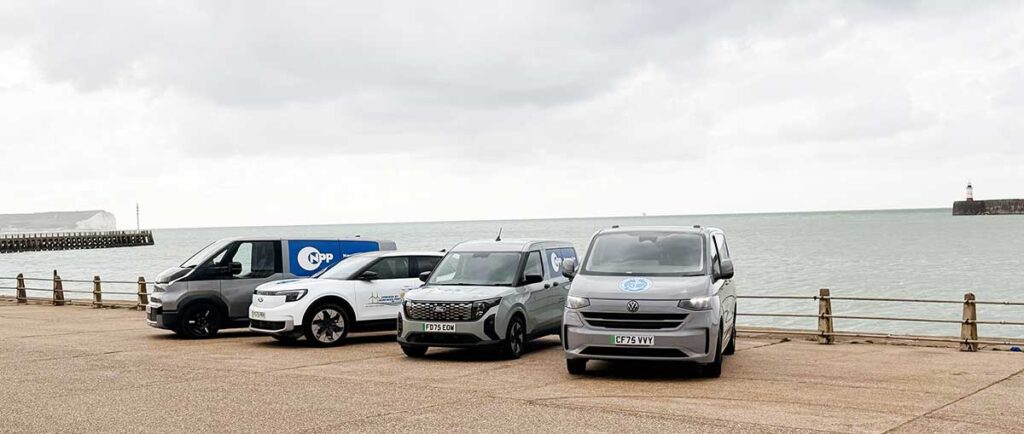
As global trade evolves to meet the challenges of climate change and sustainability, UK ports sit at the heart of this transformation. Today, Newhaven Port and Properties are proud to announce another significant step forward in our journey toward a cleaner, greener future with the expansion of our electric vehicle fleet, which now consists of four EVs operating across the port estate.
A Strategic Shift Toward Sustainability
Ports have long been engines of economic growth — but with that role comes responsibility. Transport emissions remain a major contributor to air pollution and greenhouse gas output across the logistics sector. By adopting electric vehicles across our operations, we are actively reducing our carbon footprint and supporting national and international climate targets in line with our Port Masterplan.
This transition is not just about compliance — it is about leadership. We are aligning our operations with the UK’s net zero ambitions while demonstrating that sustainable innovation and operational excellence go hand in hand.
Gary Milan, Safety, Health, Environment and Operations Manager at Newhaven Port, said:
“The transition from our traditional fossil fuelled vehicles to our new EV fleet shows a real commitment from Newhaven Port to our decarbonisation programme.
By changing over to electric vehicles, the Port seeks to provide safe, inclusive and efficient transport in line with government guidelines and affirms Newhaven Port’s drive to implement sustainable travel, supporting cleaner air and contributing to the UK’s net zero targets.”
Cleaner Air for Our Workforce and Community
Air quality is a critical issue for ports, where workers and nearby communities can be exposed to emissions from heavy and light vehicles alike. Electrifying our fleet will significantly reduce harmful pollutants such as nitrogen oxides (NOx) and particulate matter.
The result is a healthier working environment for our employees and a cleaner atmosphere for the communities that surround and support our port.
Driving Operational Efficiency
Beyond environmental benefits, EVs offer compelling operational advantages. Electric vehicles typically have fewer moving parts than their internal combustion counterparts, resulting in lower maintenance requirements and reduced downtime.
Combined with the stability of electricity pricing compared to fossil fuels, this transition will deliver long-term cost efficiencies while enhancing reliability across our day-to-day operations.
Investing in Infrastructure and Innovation
This transition is supported by investment in modern charging infrastructure across the Newhaven Port estate. We are rolling out a phased programme to install charging points strategically positioned to support operational needs without disruption.
In parallel, we are exploring smart energy solutions, including load management systems and the potential integration of renewable energy sources, ensuring that our EV journey is both sustainable and resilient.
Supporting a Greener Supply Chain
Our move towards electrification also sends a clear signal to our partners, customers and stakeholders. Sustainability is no longer a future ambition — it is a present priority.
We are committed to working collaboratively with shipping lines, logistics operators and contractors to encourage wider adoption of low-emission technologies, helping to decarbonise the entire port ecosystem.
Looking Ahead
The transition to electric vehicles marks an important milestone, but it is only one part of our broader sustainability strategy. We will continue to explore innovative solutions, from alternative fuels to energy-efficient infrastructure, as we work towards becoming a lower-emission port.
By embracing change today, we are building a stronger, more sustainable port for tomorrow — one that continues to serve industry, community and environment with equal commitment.